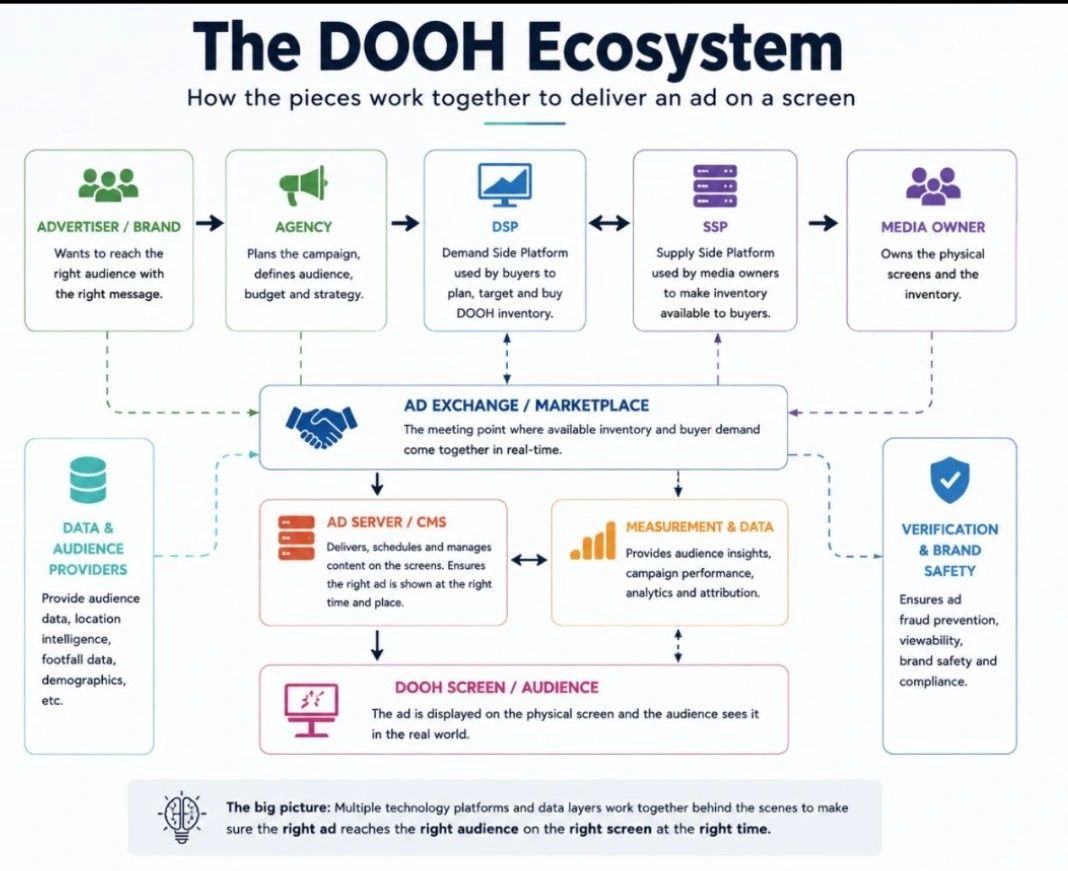
Digital Out-of-Home (DOOH) advertising is not simply about putting an ad on a digital screen. Behind every impression is an ecosystem of platforms, data, technology, and multiple stakeholders working together.
Here’s how the pieces connect:
🔹 Advertiser / Brand — Defines the marketing objective and target audience.
🔹 Agency — Plans the campaign, budget, audience, and strategy.
🔹 DSP (Demand-Side Platform) — Enables buyers to plan, target, and purchase DOOH inventory.
🔹 SSP (Supply-Side Platform) — Helps media owners make their available inventory accessible to buyers.
🔹 Media Owner — Owns the physical screens and advertising inventory.
🔹 Ad Exchange / Marketplace — Connects buyer demand with available inventory, often in real time.
🔹 Ad Server / CMS — Delivers, schedules, and manages the actual content displayed on screens.
🔹 Data & Audience — Provides insights such as location, demographics, footfall, and audience behavior.
🔹 Measurement & Analytics — Measures campaign delivery, performance, attribution, and effectiveness.
🔹 Verification & Brand Safety — Helps ensure viewability, fraud prevention, brand safety, and compliance.
🔹 DOOH Screen / Audience — Where everything ultimately comes together and the audience sees the advertisement.
The real power of DOOH comes from how these components work together — connecting advertisers and audiences through technology, data, automation, and measurable outcomes.
In simple terms:
Right Ad + Right Audience + Right Screen + Right Time = Effective DOOH Advertising.
As DOOH continues to become more programmatic and data-driven, understanding this ecosystem is becoming increasingly important for everyone working in digital advertising and media technology.